Montabi Combat & Positioning on the 3×3 Grid
Turn order, AP banking, front-line blocks, and three-turn revive windows explained for Montabi battles.
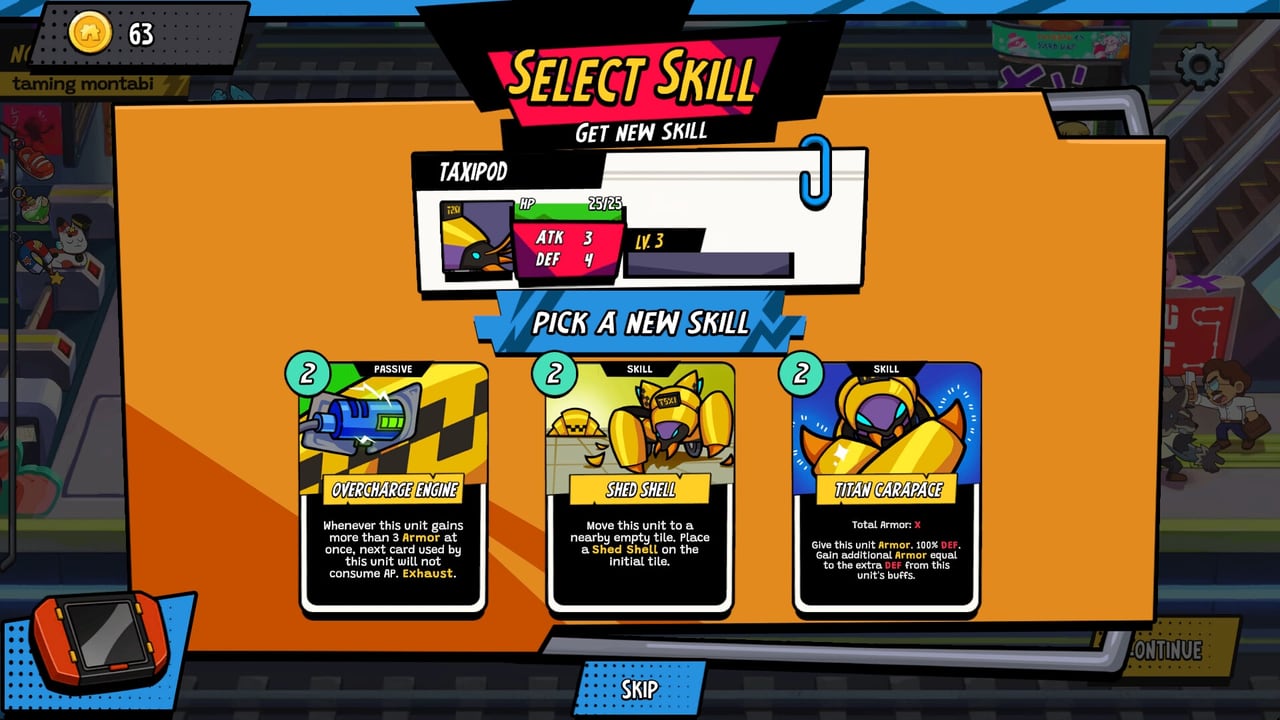
Montabi fights are turn-based deck battles on a 3×3 grid. Your Trainer and up to two Montabi each bring a separate deck, draw four cards when their turn begins, and gain 3 AP to spend on cards. Unused AP carries forward on that unit, so smart players often hold points for a bigger turn instead of playing every cheap card immediately. Positioning decides who gets hit, which lanes your attacks reach, and whether your Trainer stays alive when an elite telegraphs a big strike.
This guide assumes you finished Getting Started. For taming and team construction, see How to Tame Montabi and Builds. Trainer kits are covered on Trainers.
Grid layout and lanes
Think of the grid as three columns and three rows. Enemies occupy tiles the same way you do. Most melee-style cards target adjacent tiles or the front row facing them; ranged or piercing cards ignore a blocker if the game text says so. There is no hidden depth—read the targeting line on each card once and you know whether moving one tile changes everything.
Front row tiles are for units that should absorb hits or body-block elites from reaching your Trainer. Middle and back rows protect low-HP Montabi that scale with setup turns. The Trainer does not have to sit in the back, but leaving them exposed without a blocker is the fastest way to lose a run.
Turn flow and AP economy
Units take turns according to battle rules shown in the UI (speed or initiative icons on cards and passives). On a unit’s turn:
- It draws up to four cards (hand size rules still apply if your deck is thin).
- It receives +3 AP.
- You play cards by spending AP until you pass or run out of playable options.
Because AP carries, a Montabi that spends only 1 AP this turn may spend 5 AP next turn if it gains another 3. This enables combo lines: stun now, execute next round, or block now, heal next round. Trainer cards and Montabi cards interact but do not share AP pools—plan each unit separately.
Over-spending every turn feels good but leaves you brittle when a surprise elite action demands a defensive card you cannot afford. Mid-tier players bank AP on the Trainer when they expect a telegraphed attack turn.
Trainer death versus Montabi KO
Trainer HP at zero ends the entire run. Montabi KO is temporary: you have three turns to revive a downed Montabi. Fail that window and Injury cards shuffle into its deck, weakening that fighter for the rest of the route. Injuries are why you protect support Montabi even when your DPS Montabi could trade hits for speed.
Revive cards, items from Items, and some Trainer passives interact with KO timing. If you are unsure whether a revive counts on the third turn, pause and read the card text—do not guess during boss fights covered in How to Beat Bosses.
Deck responsibilities per unit
Each Montabi deck reflects its species and evolution stage. After levels 5 and 10, evolved forms add or replace cards—see How to Evolve Montabi. Your Trainer deck changes with Student, Fighter, or Chef selection.
Split roles deliberately:
- Blocker Montabi —high HP, taunt-like or guard cards, sits front column.
- Damage Montabi —spends carryover AP on finishers from a safer row.
- Trainer —removal, buffs, or emergency heals that keep the run alive.
Use the Tier List to pick species whose native cards match the role you need, not just raw stats.
Positioning patterns that work early
Corner anchor: Place your blocker on a front corner so two enemy melee paths need extra movement to wrap around. Your damage Montabi sits diagonally behind.
Trainer pocket: Trainer on back center with a Montabi directly in front. Simple and strong against single-lane elites until piercing shows up.
Swap lane: Some cards push or pull enemies. Moving an elite off-center can break its AoE pattern—practice this on regular nodes before City Map & Events elites.
Card draw and deck thinning
Drawing four cards each activation means bloated decks hurt consistency. Visit Stickards nodes and shops listed in the city guide to remove weak cards. Tools help compare deck lists if you screenshot mid-run.
When a Montabi is KO’d mid-fight, it stops drawing until revived—plan AP on the remaining units so the Trainer does not face a solo boss phase.
Elite and boss positioning notes
Elites punish lazy Trainer placement. Before you enter an elite node, ask:
- Can any enemy card reach my Trainer if my front Montabi dies this turn?
- Do I have a carryover AP defensive play ready on the Trainer?
- Are both Montabi evolved enough for this check? Evolution timing is in the evolution guide.
X Gang bosses layer multiple phases; the boss guide covers telegraphs, but positioning always comes first—dead Trainers do not finish phases.
Practice drill
Run three normal fights focusing only on AP carry and front-row blocks. Do not tame new Montabi during the drill. If you finish with Trainer above seventy percent HP and no injuries, move on to taming and economy guides. If not, re-read card keywords and try a different front-line species from the tier list.
Combat mastery in Montabi is less about memorizing every enemy and more about respecting grid geometry, per-unit AP, and Trainer survival. Position first, spend AP second, and treat Montabi KO as a clock you must beat within three turns.
Frequently Asked Questions
Quick answers to the most common Montabi questions.
How much AP does each unit get per turn?
Each unit gains 3 AP at the start of its turn. Unspent AP carries over to that unit's next turn.
How many cards do I draw each turn?
Each unit draws four cards when its turn begins, from its own deck.
What happens if a Montabi stays KO'd?
You have three turns to revive it. After that, Injury cards enter its deck and weaken future draws.
Can I field three Montabi?
No. Battles allow the Trainer plus up to two Montabi on the grid.
Does positioning affect ranged attacks?
Yes, unless a card explicitly ignores blockers. Always read targeting text before moving.