Montabi Fighter Trainer Guide
Take the front row yourself—stack Resonance, swap stances, and win before the grid collapses.
The Fighter Trainer is Montabi’s aggressive leader: a frontline-focused playstyle built around Resonance and stance changes instead of the Student reposition toolkit or Chef flavor cooking. She joins your roster after rank up progression on your account—alongside the Chef—so most players meet her once they understand Trainer death ends the run and how AP carryover shapes turns on the 3×3 grid.
Use the Trainers Hub for unlock context and synergy tiers when pairing companions that cover her exposed leader slot.
Unlock and expectations
You begin Montabi with the Student only. Fighter unlocks through the same rank progression path that gates advanced account rewards—not a hidden side quest. When she appears, treat your first Fighter routes as training wheels: lower difficulty nodes, familiar starter lines, and biscuits saved for tames that protect rather than speed-run damage.
Montabi’s official pitch describes three trainers with distinct fantasies: position pieces (Student), brawl in their faces (Fighter), or buff with meals (Chef). Fighter delivers on that middle promise—she dukes it out while your two Montabi supply deck synergy from the 22 starter families, each evolving at level 5 and level 10 with drafted skills.
Resonance and stances in practice
Resonance is Fighter’s scaling resource: successful aggressive lines build it so later stance actions or attacks hit harder. Stances swap how she interacts with the grid—offensive patterns that trade safety for tempo, or defensive postures that stabilize when a boss prepares a column wipe. The exact card names change as you progress, but the strategic rhythm is consistent:
- Enter a stance that matches the enemy formation (row sweep vs column sweep).
- Spend AP on Montabi cards that do not abandon the Fighter on a kill tile.
- Bank carryover AP when you need a stance swap plus a finisher next turn.
Because the Fighter often stands near danger, row attacks that would barely scratch a Montabi can end your run if they connect with the Trainer. This is the opposite problem Student solves—instead of moving allies away, you must end fights quickly or mitigate with shields, taunts, and heals from companions.
Companion picks and public examples
Fighter routes want Montabi that hold aggro, clean up after your burst, or scale while you build Resonance:
- Kyuchi, the sword-wielding fox highlighted in previews, fits aggressive routes that want consistent melee pressure.
- Ruffin bleed decks complement Fighter tempo if you force enemies to move—or punish them for standing still in a bloody row.
- Vem-style control can stall elites while Resonance ramps, though slow plans clash with Fighter’s risk profile unless you know boss patterns.
Avoid double-dipping on glass-cannon lines unless cafes and healing events are plentiful on your map seed. Reviews note Fighter is capable but punishing compared with Student or Chef for players still learning biscuit economy and evolution drafts.
Grid tactics specific to Fighter
Column and row telegraphs matter more when your Trainer occupies a front tile. Before committing a stance swap, read which enemy cards remain in deck cycles—Montabi enemies use the same grid rules you do. Sometimes the winning line is not another Resonance stack but a Student-style reposition from a Montabi card that pulls the Fighter off a marked tile.
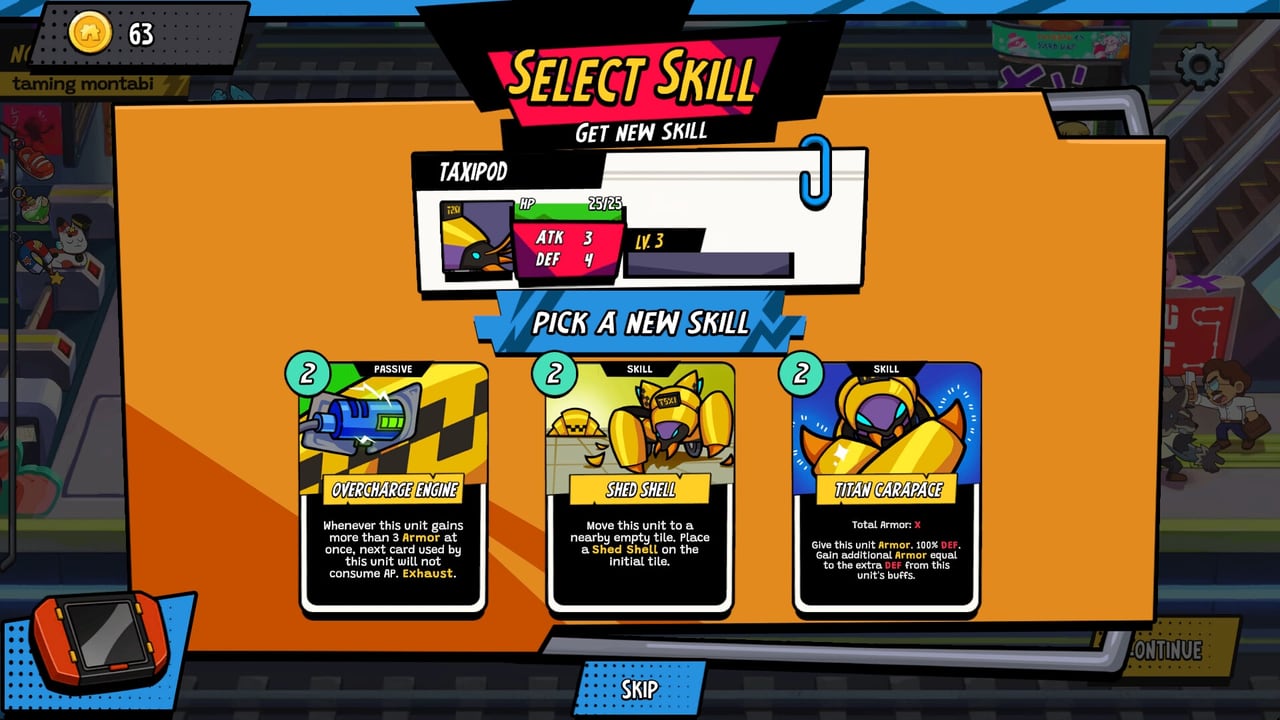
Evolution drafts at level 5 and 10 should include survival tools early in a Fighter career: extra block, heal, or displacement on companions even if damage cards look shiny. Mid-run evolutions redefine decks; a defensive level-5 pick on a tank line often saves a later boss that outranges your stance.
Progression and alternate leaders
After Fighter clicks, try Chef for flavor-driven scaling that cares less about frontline chess. Return to Student when learning a newly unlocked starter line under random triple drafts—see starter tiers for role value, not imaginary fixed meta.
Fighter shines in hands that enjoy Slay the Spire–style risk: push damage, accept telegraphed hits, and use biscuits to tame a third-line answer for one bad seed. She is less forgiving when run RNG offers three starters with no frontline.
Mistakes that end runs
- Maxing Resonance while standing in a column the boss flagged two turns ago.
- Ignoring cafes because Fighter “should—speed kill everything.
- Drafting only Montabi damage without a plan when the Trainer must swap stances twice in one long fight.
- Taming novelty picks that do not stabilize your front row against X Gang elites.
Related links
Hub overview: Trainers Hub. Supportive alternative: Student. Setup alternative: Chef. Team ideas: Tier List Hub and synergies.
Frequently Asked Questions
Quick answers to the most common Montabi questions.
When can I play as the Fighter Trainer?
After you rank up through normal run progression and unlock her on your account—same unlock track as Chef, separate from Student who is available immediately.
What is Resonance on Fighter?
It is her scaling resource for aggressive lines and stance payoffs. Build it when you can safely follow up; do not treat it as free damage if the Trainer is exposed on the grid.
Is Fighter harder than Student?
She demands more frontline awareness because Trainer death ends the run while she often sits in harm’s way. Many players learn on Student first.
Which Montabi help Fighter the most?
Frontline stabilizers and cleanup damage dealers help most—examples from previews include aggressive lines like Kyuchi and bleed pressure like Ruffin, adjusted for your draft RNG.
Do stances share AP with Montabi cards?
Yes—plan full turns with carryover AP in mind. Stance swaps plus Montabi finishers often win elite fights; spamming one side of the kit without placement loses runs.